The ritual
The Wai Khru dance explained
What the Wai Khru Ram Muay is, why Muay Thai fighters perform it before every bout, what the music and the headband mean and how to watch it.
Choose your fight night ↗Quick answer
The Wai Khru Ram Muay is the ritual dance a Muay Thai fighter performs in the ring before a bout. It shows respect and gratitude to the fighter's teachers, parents and ancestors, it is accompanied by live music, and it is part of the night at the Ao Nang stadium.
What the name means
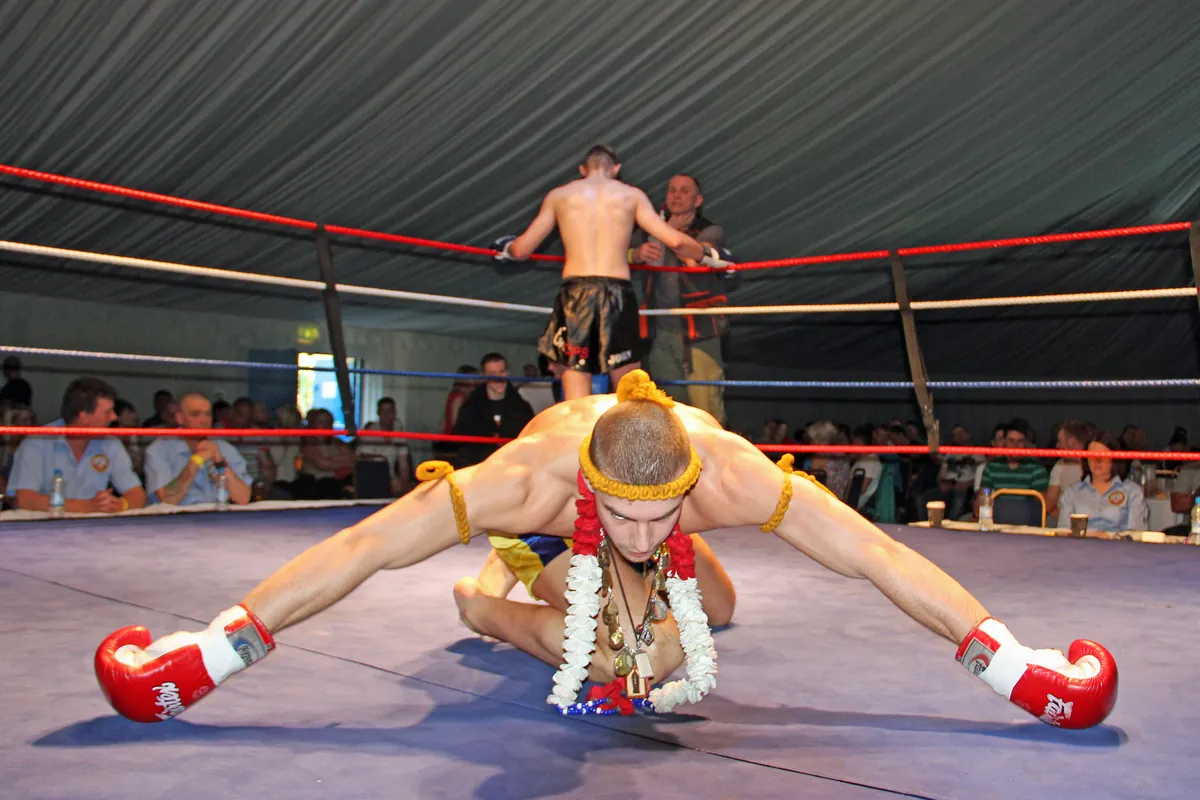
Wikipedia breaks the term into parts. Wai is the Thai greeting with the palms together as a sign of respect, and khru comes from the Sanskrit word guru, meaning teacher. Ram refers to classical-style dancing, and muay means boxing. The full term is often translated as a war dance saluting the teacher. The ritual is performed in the ring before a bout, and it is the part of Muay Thai that visitors tend to remember best.
What the fighter is doing
In Wikipedia's account the fighter walks the ring anti-clockwise, stops to pray at each corner and bows three times, to the Buddha, the Dharma and the Sangha. The movements are said to draw on Hanuman. No two versions are the same, because the ritual is personal and may be elaborate or plain. A fighter's version also tends to reveal who trained them and where they come from.
Respect for teachers and family
The ceremony expresses respect and gratitude to the fighter's teacher, parents and ancestors, according to Wikipedia, and reflects wider Thai values of respect for authority and tradition. It once paid respect to the king when bouts were held before royalty. Over time, Wikipedia says, its focus shifted from a connection with spirits to a connection with teachers and trainers.
The music
Live music accompanies the dance. The song played during the pre-fight ritual is sarama, Wikipedia says, and what follows once the bout begins is phleng muay. A small band of up to four plays it: a pi (a reed instrument), two klong khaek drums and a ching, which is a set of brass cymbals. Wikipedia describes the tempo as slow and stately at first, quickening when the fight starts, and flags that article as needing more citations, so treat the detail as general.
The headband and armbands
A fighter may wear a headband called the mongkhon, and armbands called the pra jiad. Wikipedia says they are worn into the ring for luck and protection, and that they originated when Siam was in a constant state of war. Today the mongkhon is a tribute to the fighter's gym. After the ritual the trainer often removes the mongkhon and puts it in the corner for luck.
Why it opens every bout
In Muay Thai the ritual is a point of ceremony before a contest, not a performance for the crowd. It marks the move from respect to competition, and it gives the fighter a moment to settle. For a visitor it is also the clearest sign that this is a Thai tradition, not a generic fight. The booking page for the Ao Nang night names the Wai Khru Ram Muay as part of the evening.
How to watch it
Watch quietly. Notice the direction of the circle, the pauses at the corners and the bows. Notice the music and how the pace changes once the dance ends. If a fighter wears a mongkhon and pra jiad, look for the moment the trainer takes the headband off. You do not need to know the symbolism to enjoy it, but a little knowledge adds to the evening.
Is it religious?
It has religious elements, such as the bows to the Buddha, the Dharma and the Sangha, but Wikipedia describes the ritual's modern focus as honouring teachers. Visitors of any belief can watch respectfully. Do not film at close range in a way that distracts the fighter, and follow any instructions given by staff in the stadium.
What to expect at Ao Nang
The night is built around Thai and international fighters, and the booking page says the Wai Khru Ram Muay comes before the bouts. Each fighter's ritual will differ. Some will be short and some longer, and which you see depends on the card. The calendar shows only whether a night is on, so treat the ritual as a part of the evening that you can count on and the rest as variable.
Who this isn't for
If you would like a staged dance with a script, the ritual is not that. It is brief and personal, and its meaning is partly lost on someone who does not know it. If you are uneasy about fighting, the ritual will not change how the bouts feel. A boat trip is the quieter alternative for an Ao Nang evening.
Frequently asked questions
What is the Wai Khru Ram Muay?
A ritual dance performed in the ring before a Muay Thai bout. It shows respect to the fighter's teacher, parents and ancestors.
Why does the fighter circle the ring?
Wikipedia says they circle counter-clockwise, praying at each corner and bowing three times to the Buddha, the Dharma and the Sangha.
What is the music called?
The song during the ritual is called sarama. The music that follows is called phleng muay.
What is the headband for?
The mongkhon is worn for luck and protection and, today, as a tribute to the fighter's gym.
Sources